
Find a workshop

Search by name or topic, or narrow the list by workshop group and stage.

Workshop group

Aerospace and Flight

Forces in Space: Early Level

Forces in Space: Early Level

Stage: N–P1

Explore planets, constellations, seasons and forces through playful investigations of Earth, the Moon and the Sun.

Learn moreShow less

Forces in Space introduces young learners to planets, constellations and some of the forces at work in space through practical, play-based activities.

Children explore how the Earth, Moon and Sun move, investigate how this movement creates day, night and the seasons, and consider how different seasons affect what we wear. They can create their own impact craters, discover familiar constellations and design imaginative constellations of their own.

The workshop encourages curiosity, observation and discussion while introducing early scientific ideas about space in an accessible and engaging way.

CfE links

  • SCN 0-06a
  • SCN 0-07a

Enquire

Renewable Energy

Energy Explorers

Energy Explorers

Stage: N–P2

A lively, hands-on introduction to energy, electricity and renewable power through storytelling, demonstrations, experiments and creative challenges.

Learn moreShow less

Energy Explorers is a lively, hands-on workshop designed for early years pupils, introducing the big ideas behind energy in a playful and accessible way.

Through movement, storytelling, demonstrations and interactive activities, children discover what energy is, how it can be stored and transferred, and why electrical energy is important in everyday life.

Pupils explore where electricity comes from, including fossil fuels, wind and solar power, and learn why using renewable energy and saving electricity helps protect the environment.

Packed with role-play, experiments and creative challenges, this workshop builds early science understanding while encouraging curiosity and active participation.

CfE links

  • SCN 0-04a
  • SCN 1-04a

Enquire

Renewable Energy Play Mat

Renewable Energy Play Mat

Stage: N–P4

Explore renewable energy and sustainable living through interactive, age-appropriate play and meaningful group discussion.

Learn moreShow less

This Early and First Level workshop introduces children to renewable energy and sustainable living through interactive play.

Using a specially designed play mat and supporting resources, learners explore where energy comes from and how it is used in homes, transport and communities.

Children investigate renewable technologies such as wind and solar power while considering how design choices can affect energy use and the environment.

Through imaginative play, discussion and practical challenges, pupils begin to explore ways people can save energy, reduce waste and make communities more sustainable.

The workshop encourages curiosity, communication and problem-solving while making important environmental concepts accessible to younger learners.

CfE links

  • TCH 0-05a
  • TCH 0-06a
  • TCH 0-07a
  • TCH 0-09a
  • TCH 0-12a

Enquire

Energy Sources and Sustainability

Energy Sources and Sustainability

Stage: P5–P7

Research different renewable-energy sources and communicate how they can support a more sustainable future.

Learn moreShow less

This Second Level workshop helps learners investigate different forms of renewable energy and consider their role in creating a more sustainable future.

Working in small groups, pupils research an energy source such as wind, solar, hydroelectric, tidal or wave power.

Learners explore how the technology works, where it can be used, its potential benefits and the challenges associated with generating energy in that way.

Each group decides how best to communicate its findings before presenting them to the rest of the class.

As an extension, pupils can develop their presentations for a school assembly or awareness campaign, helping others understand renewable energy and the importance of making sustainable choices.

CfE links

  • TCH 2-06a
  • TCH 2-07a
  • SOC 2-08a

Enquire

Nature

Creative Caterpillars

Creative Caterpillars

Stage: P1–P2

Explore the caterpillar life cycle through storytelling, a colourful jigsaw and a hands-on seed-bomb activity that helps support local wildlife.

Learn moreShow less

Creative Caterpillars is a hands-on science workshop for younger pupils that explores the life cycle of a caterpillar in a fun and memorable way.

Inspired by The Very Hungry Caterpillar, children begin with story time before reinforcing their learning through a colourful life-cycle jigsaw.

The session finishes with a practical activity in which pupils make seed bombs to grow plants that provide food for caterpillars and other wildlife.

Combining storytelling, creativity and environmental learning, this workshop encourages curiosity about nature, life cycles and caring for the living world around us.

CfE links

  • SCN 0-01a
  • SCN 1-02a
  • SCN 2-02a

Enquire

Oil Spill Challenge

Oil Spill Challenge

Stage: P5–P7

Investigate how oil spills affect the environment before designing and testing a prototype device to clean up a model oil slick.

Learn moreShow less

This Second Level workshop explores how oil is formed, how it is used and the environmental impact of an oil spill.

Learners investigate what happens when oil enters an aquatic environment and consider the challenges faced by people attempting to contain and remove it.

Working collaboratively, pupils design and build a prototype device or method for cleaning up a model oil slick.

They test their ideas, observe the results and refine their designs to improve their effectiveness.

The workshop combines environmental science with an engineering challenge, encouraging learners to consider how technology and creative problem-solving can help reduce the impact of pollution.

CfE links

  • SCN 2-04b
  • TCH 2-07a

Enquire

Creature Feature

Creature Feature

Stage: P5–P7

Explore how marine animals are adapted to their environments before using that knowledge to design an original sea creature.

Learn moreShow less

This Second Level workshop introduces pupils to the remarkable ways marine animals have adapted to survive in different ocean environments.

Learners investigate how features such as body shape, colour, movement, feeding structures and protective adaptations help animals find food, avoid predators and cope with challenging conditions.

Pupils then apply their scientific understanding by designing an original marine species suited to a particular habitat.

They consider what their creature eats, how it moves, how it protects itself and which physical features will help it survive.

Combining marine science with creative design, the workshop develops an understanding of adaptation while encouraging imagination, communication and evidence-based thinking.

CfE links

  • SCN 2-01a
  • EXA 2-04a
  • EXA 2-05a

Enquire

Ecosystem Jenga

Ecosystem Jenga

Stage: P5–P7

Use a hands-on tower activity to investigate marine food webs and discover how changes to one species can affect an entire ecosystem.

Learn moreShow less

This Second Level workshop introduces pupils to marine food webs and the relationships between organisms within an ecosystem.

Using a hands-on tower activity, learners explore how producers, consumers and predators depend on one another for energy and survival.

As blocks are removed or conditions are changed, pupils observe how disruption to one part of the food web can affect the stability of the whole ecosystem.

The workshop also encourages learners to consider how pollution, overfishing, habitat damage and other human activities can influence marine environments.

Through discussion, prediction and practical investigation, pupils develop an understanding of interdependence and the importance of protecting balanced ecosystems.

CfE links

  • SCN 2-01a
  • SCN 2-02a

Enquire

Pollution Tank

Pollution Tank

Stage: P5–P7

Use a model marine environment to investigate how pollution enters the ocean and affects habitats, wildlife and water quality.

Learn moreShow less

This Second Level workshop explores how different forms of pollution enter and affect marine environments.

Using a model pollution tank, learners investigate pollution from human activities and consider how substances can travel through rivers, drainage systems and coastal environments before reaching the ocean.

Pupils observe how pollution can affect water quality, marine habitats and the organisms that depend on them.

The workshop encourages learners to identify potential sources of pollution and discuss actions that individuals, communities and industries can take to reduce their environmental impact.

Through practical investigation and discussion, pupils develop an understanding of the connections between human activity, pollution and the health of marine ecosystems.

CfE links

  • SCN 2-04b
  • SCN 2-08a
  • TCH 2-06a

Enquire

Carnivorous Plants

Carnivorous Plants

Stage: P2–P4

Discover how carnivorous plants are adapted to capture insects and obtain the nutrients they need to grow.

Learn moreShow less

This First Level workshop introduces pupils to the weird and wonderful world of carnivorous plants.

Learners investigate why some plants capture insects and explore how this behaviour helps them survive in habitats where the soil contains very few nutrients.

Pupils examine the different trapping methods used by carnivorous plants, including snap traps, sticky surfaces and pitfall traps.

Through observation, discussion and practical activities, learners consider how the structures of these unusual plants are suited to their environment.

The workshop develops an understanding of plant needs and adaptations while encouraging curiosity about the diversity of the natural world.

CfE links

  • SCN 1-02a

Enquire

Plant Uses

Plant Uses

Stage: P5–P7

Investigate the many ways plants provide food, materials, medicines and other products that benefit people and society.

Learn moreShow less

This Second Level workshop explores the many ways plants are used to benefit people and society.

Learners investigate familiar and surprising plant-based products, considering how plants provide food, fibres, building materials, medicines, fuels, dyes and ingredients used in everyday items.

Pupils examine where these materials come from and how plant properties make them suitable for different purposes.

The workshop encourages learners to consider how people depend on plants and why responsible growing, harvesting and conservation are important.

Through investigation and discussion, pupils develop a broader understanding of the relationship between plants, human needs, industry and sustainability.

CfE links

  • SCN 2-02b

Enquire

Pollination

Pollination

Stage: P5–P7

Investigate how pollination works, explore different types of pollinators and discover why they are vital for plants, food production and ecosystems.

Learn moreShow less

This Second Level workshop develops pupils’ understanding of pollination and the important role pollinators play in plant reproduction.

Learners investigate how pollen is transferred between flowers and compare the different ways plants can be pollinated.

Pupils explore the roles of bees, butterflies, other insects, birds, wind and water, considering how flowers are adapted to attract or use particular pollinators.

The workshop also highlights why pollinators are important for biodiversity, healthy ecosystems and the production of many foods.

Through observation, discussion and practical activities, learners consider the challenges facing pollinators and identify ways people can help protect them.

CfE links

  • SCN 2-14a

Enquire

Creative Industries and Digital

Animation

Animation

Stage: P1–P4

Discover how animation creates the illusion of movement before planning and producing a short stop-motion film using craft materials and iPads.

Learn moreShow less

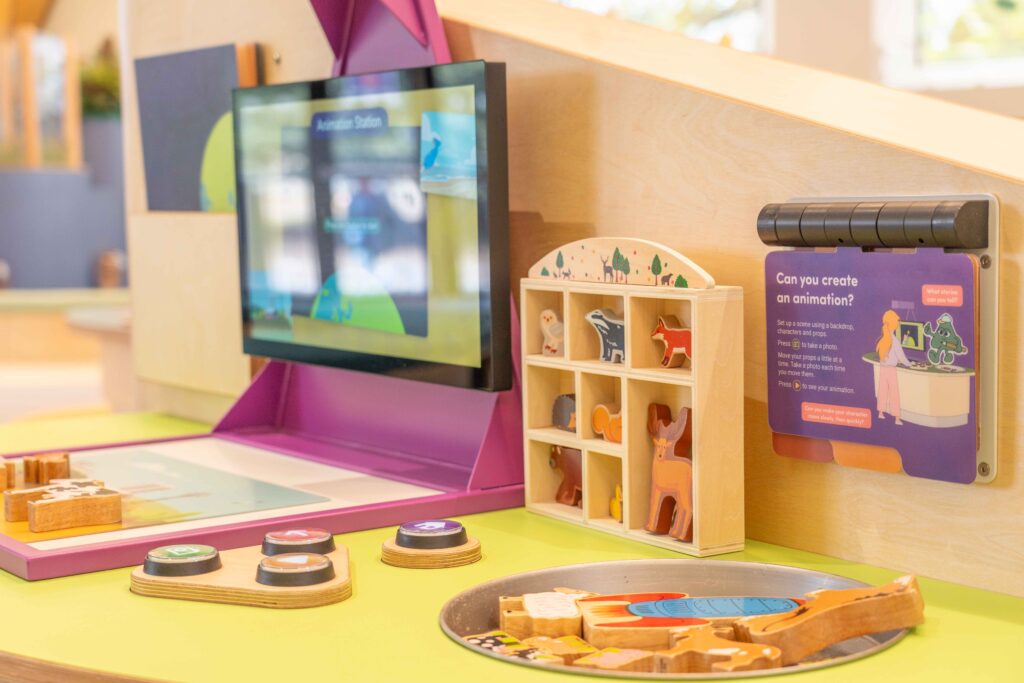
This creative, hands-on workshop introduces pupils to the science behind animation and explores how moving images create the illusion of motion.

Learners begin by investigating a zoetrope to see how early animations worked before planning their own ideas using simple storyboards.

Using craft materials and iPads with stop-motion software, pupils then create their own short animations while experimenting with frame rate, movement and storytelling.

The session combines digital skills, creativity and STEM learning, helping children understand how animation is designed while encouraging teamwork, problem-solving and imagination.

CfE links

  • TCH 2-01a
  • TCH 2-04b
  • TCH 2-10a
  • HWB 2-20a
  • EXA 2-02a
  • EXA 2-03a

Enquire

Building a Games Controller

Building a Games Controller

Stage: P5–P7

Design a simple computer game before using conductive materials to build and test a working games controller.

Learn moreShow less

This Second Level workshop combines computer-game design with practical electronics and creative problem-solving.

Pupils begin by designing a simple computer game and considering how a player will control the action.

Learners then investigate conductive materials and use them to build a physical games controller that can interact with their digital creation.

Through designing, constructing, testing and refining their controller, pupils develop an understanding of conductivity, digital systems and the relationship between computer code and physical inputs.

The workshop encourages creativity, logical thinking and collaborative problem-solving while giving learners an engaging introduction to physical computing.

CfE links

  • TCH 2-09a
  • TCH 2-14a

Enquire

Botley: Introduction to Computational Thinking

Botley: Introduction to Computational Thinking

Stage: N–P1

Develop early computational thinking by creating sequences of instructions to guide a screen-free Botley robot through practical challenges.

Learn moreShow less

This Early Level workshop introduces young learners to computational thinking and sequencing through practical play with Botley robots.

Children create a series of instructions to guide a robot along a route, reach a destination or complete a simple challenge.

Learners predict what Botley will do, test their sequence and identify where changes are needed when the robot does not move as expected.

Through playful investigation, pupils begin to understand that instructions must be clear, accurate and arranged in the correct order.

The screen-free workshop develops directional language, logical thinking, problem-solving and collaboration while providing an accessible introduction to coding.

CfE links

  • TCH 0-15a

Enquire

Introduction to Sphero and Computer Programming

Introduction to Sphero and Computer Programming

Stage: P5–P7

Programme Sphero robots while exploring algorithms, movement, angles, speed, distance and time through practical challenges.

Learn moreShow less

This Second Level workshop introduces pupils to computer programming through practical challenges with Sphero robots.

Learners explore algorithms and computer languages before creating programs that control a robot’s movement.

Pupils test and refine instructions involving direction, speed, distance and time while using angles to plan accurate turns and routes.

Through prediction, measurement and repeated testing, learners identify errors in their programs and make changes to improve the robot’s performance.

The workshop combines computing and mathematics while developing logical thinking, problem-solving, collaboration and confidence with programmable technology.

CfE links

  • TCH 2-15a
  • MNU 2-10c
  • MTH 2-17c

Enquire

Advanced Sphero: Loops and Variables

Advanced Sphero: Loops and Variables

Stage: P5–P7

Develop more advanced Sphero programs using variables, repeat loops and conditional repetition to solve robotics challenges.

Learn moreShow less

This Second Level workshop develops pupils’ programming skills through advanced practical challenges with Sphero robots.

Learners explore how variables can store and change information within a program and how repeat loops can make code more efficient.

Pupils also investigate conditional repetition, creating programs that respond differently depending on whether a particular condition has been met.

Working through a series of robotics challenges, learners design, test and debug programs that control Sphero’s movement and behaviour.

The workshop develops computational thinking, logical reasoning and perseverance while encouraging pupils to break complex problems into manageable steps.

CfE links

  • TCH 2-15a

Enquire

Construction and Engineering

Defending Our Coasts

Defending Our Coasts

Stage: P1–P4

Investigate coastal erosion and flooding before designing, building and testing structures that can protect a model shoreline from waves.

Learn moreShow less

This hands-on workshop introduces pupils to the challenges faced by coastal communities and the science behind protecting shorelines from erosion and flooding.

Learners begin with an engaging wave-tank demonstration to observe how waves affect land and buildings, and how changes in terrain can increase or reduce risk.

Working in small groups, pupils design, build and test their own coastal defences using wave trays and construction materials. They then refine their ideas through repeated testing.

Through experimentation and problem-solving, pupils develop an understanding of coastal processes, engineering solutions and how people can help protect vulnerable coastal environments.

CfE links

  • SCN 2-20a
  • SCN 2-20b
  • SOC 2-08a
  • TCH 2-09a
  • TCH 2-12a
  • HWB 2-20a
  • SOC 2-07b
  • EXA 2-06a

Enquire

Building Our Community

Building Our Community

Stage: P1–P4

Explore simple machines and construction through practical demonstrations, imaginative play and collaborative building challenges.

Learn moreShow less

This practical, play-based workshop introduces pupils to the world of construction and explores how communities are built.

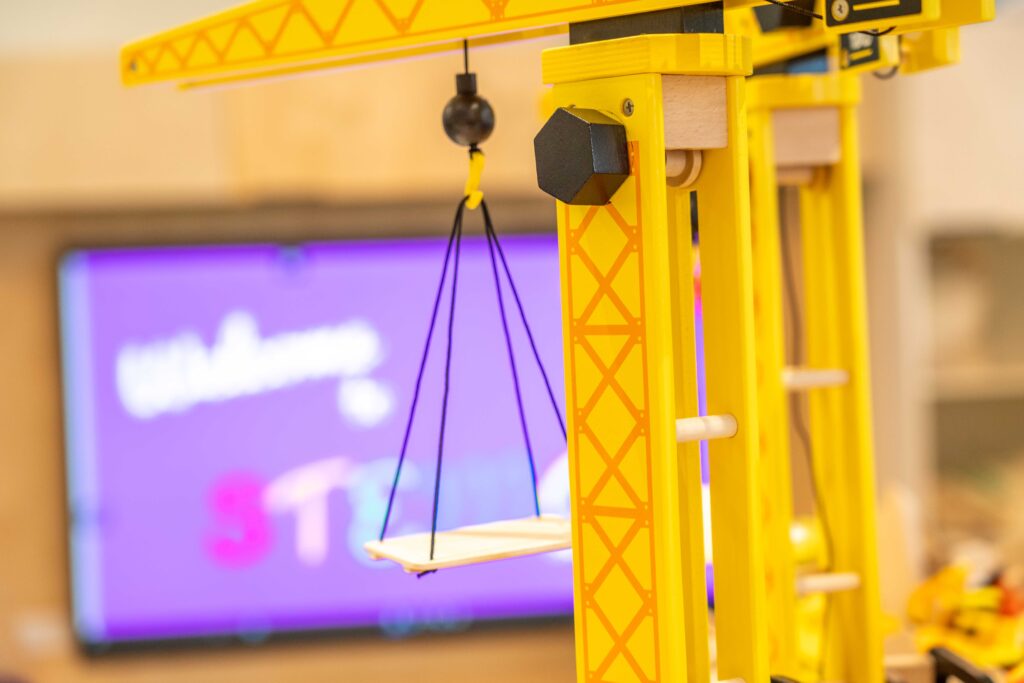
Learners investigate simple machines through a pulley demonstration, discovering how construction workers lift heavy materials safely and efficiently.

Children then take on the role of builders, using blocks, cranes, sand and construction equipment to design and create structures on a Moray floor map or in sensory play trays.

Through hands-on exploration and imaginative play, the session develops early engineering skills, problem-solving, teamwork and an understanding of how buildings, tools and materials shape the places where we live.

CfE links

  • SCN 0-07a
  • SCN 0-15a
  • SCN 0-20a
  • SOC 0-07a
  • SOC 0-17a
  • SOC 0-18a
  • SCN 1-07a
  • SCN 1-15a
  • SCN 1-20a
  • TCH 1-09a
  • TCH 1-12a
  • HWB 1-20a
  • SOC 1-07a
  • SOC 1-13a
  • SOC 1-14a
  • SOC 1-17a
  • SOC 1-22a

Enquire

Electromagnetism

Electromagnetism

Stage: P3–P5

Investigate magnets, magnetic fields and electricity through practical activities exploring how movement can be used to generate electrical energy.

Learn moreShow less

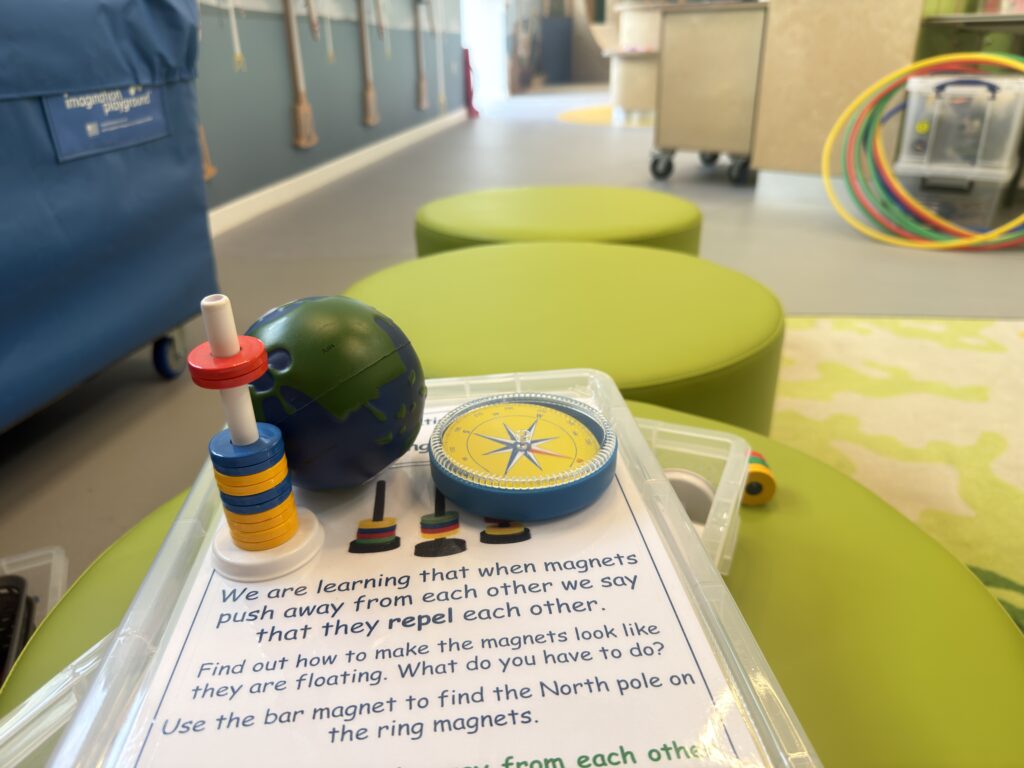
This interactive workshop introduces pupils to the science of magnets and electricity through hands-on investigation and discovery.

Working in small groups, children explore attraction and repulsion, magnetic fields and how magnets are used in everyday technology.

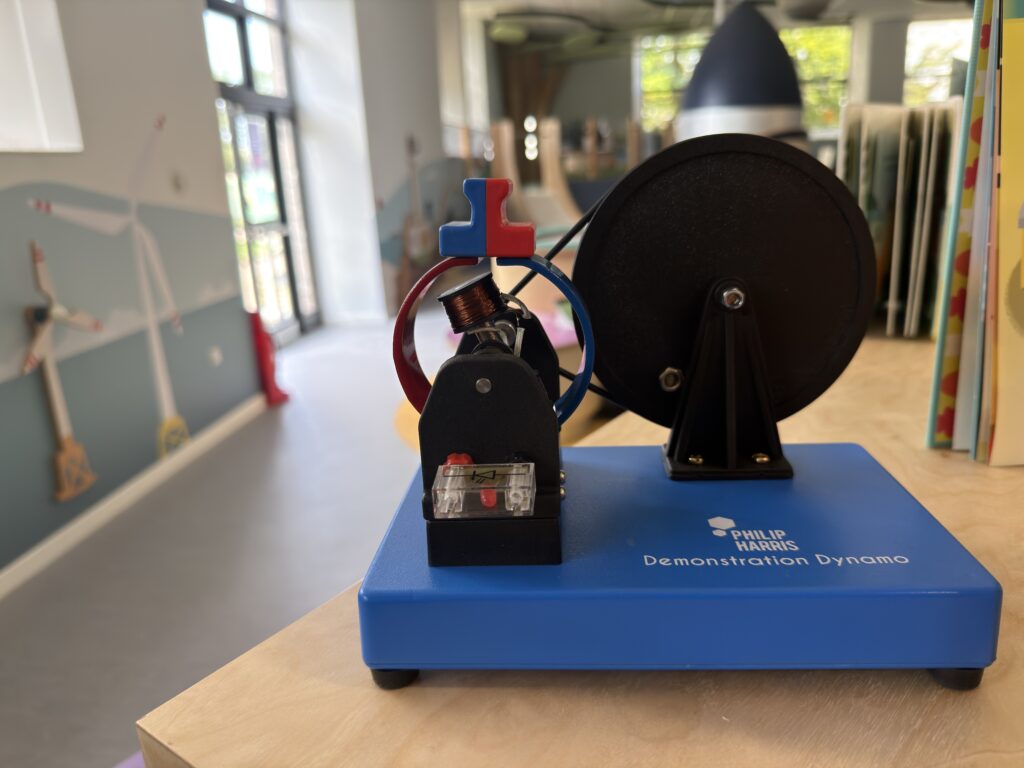
The session demonstrates how moving magnets and coils of wire can generate electricity, connecting the investigation to wind, hydroelectric and fossil-fuel power stations.

Through practical activity stations, group challenges and engaging demonstrations, the workshop builds confidence, curiosity and a strong foundation in physical science concepts.

CfE links

  • SCN 1-07a
  • SCN 1-08a
  • SCN 2-04a

Enquire

KAPLA Construction and Design: Early Level

KAPLA Construction and Design: Early Level

Stage: N–P1

Build, test and improve imaginative structures with KAPLA planks while developing early engineering, shape and problem-solving skills.

Learn moreShow less

This Early Level workshop introduces young learners to construction, design and engineering through creative play with KAPLA wooden planks.

Children experiment with stacking, balancing and arranging the identical planks to create their own structures.

Learners are encouraged to talk about their ideas, recognise shapes and consider why some designs are stronger or more stable than others.

When a structure falls or does not work as expected, children use trial and error to change and improve their design.

The workshop supports creativity, communication, spatial awareness and early problem-solving while giving learners the freedom to explore construction through hands-on play.

CfE links

  • TCH 0-09a
  • ENG 0-12a
  • MTH 0-13a
  • MTH 0-19a

Enquire

KAPLA Construction and Design: First Level

KAPLA Construction and Design: First Level

Stage: P2–P4

Design and improve 2D and 3D KAPLA constructions through creative challenges, practical problem-solving and trial and error.

Learn moreShow less

This First Level workshop introduces pupils to construction and engineering through practical design challenges using KAPLA wooden planks.

Learners investigate how identical planks can be arranged to create a wide variety of 2D patterns and 3D structures.

Pupils plan and build their own designs while exploring balance, stability, shape and structure.

Through testing and trial and error, learners identify weaknesses, make changes and improve their constructions.

The workshop develops spatial reasoning, creativity and perseverance while encouraging pupils to communicate their ideas and work collaboratively to solve practical engineering problems.

CfE links

  • TCH 1-09a
  • TCH 1-12a
  • MTH 1-16a

Enquire

KAPLA Construction and Design: Second Level

KAPLA Construction and Design: Second Level

Stage: P5–P7

Tackle advanced construction challenges by designing, testing and improving stable 2D and 3D structures with KAPLA planks.

Learn moreShow less

This Second Level workshop develops pupils’ understanding of construction and engineering through increasingly challenging KAPLA design activities.

Learners plan and create 2D and 3D structures while considering balance, stability, load, shape and the efficient use of materials.

Pupils test their constructions, identify weaknesses and use evidence from each attempt to refine and improve their designs.

Challenges can encourage learners to work within constraints such as limited materials, minimum heights or specific structural requirements.

The workshop develops creative thinking, spatial reasoning, perseverance and collaborative problem-solving while introducing pupils to an iterative engineering design process.

CfE links

  • TCH 2-09a
  • TCH 2-12a

Enquire

Manufacturing

Food Manufacturing

Food Manufacturing

Stage: P1–P4

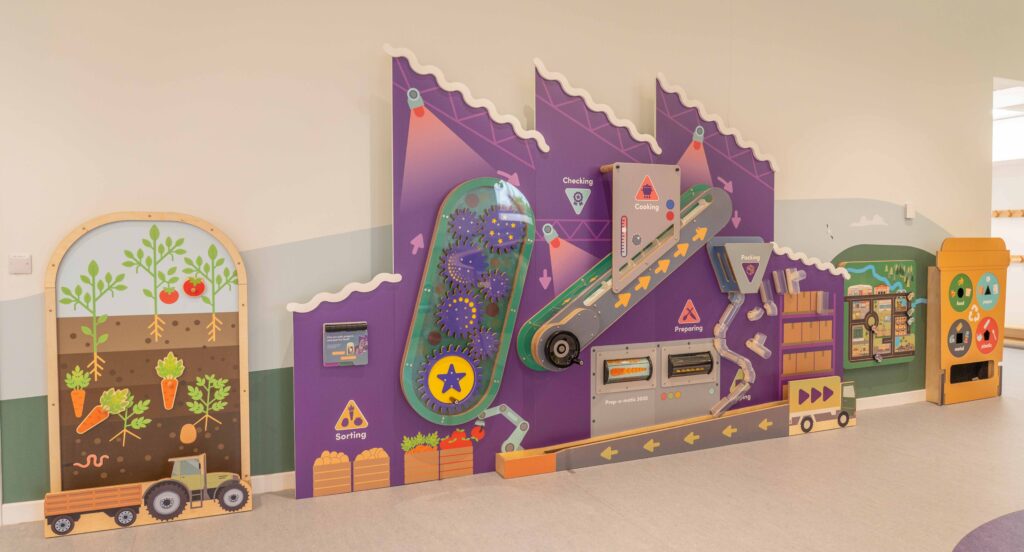
Explore how everyday foods are produced through practical activities involving weighing, measuring, mixing, sorting and food-label design.

Learn moreShow less

This interactive workshop introduces pupils to the science and processes behind how everyday foods are made.

Through an eye-catching demonstration, learners explore how food additives can change texture before taking part in hands-on activities inspired by real food-manufacturing techniques.

Children investigate weighing and measuring, sieving and separating ingredients, mixing wet and dry materials, sorting foods into categories and designing their own food labels.

By combining sensory play, practical skills and real-world examples, the workshop builds an understanding of food production, nutrition and quality control while encouraging curiosity, problem-solving and teamwork.

CfE links

  • TCH 0-04a
  • HWB 0-20a
  • HWB 0-35a
  • TCH 1-04a
  • TCH 1-04c
  • HWB 1-20a
  • HWB 1-30a
  • HWB 1-37a

Enquire

Health and Life Sciences

Glorious Germs

Glorious Germs

Stage: P1–P7

Enter the fascinating world of germs through experiments, creative activities and stories exploring infection, immunity, hygiene and vaccination.

Learn moreShow less

Dive into the fascinating and sometimes gruesome world of germs in this lively, hands-on science workshop.

Pupils explore what germs are, how bacteria and viruses spread, and how our bodies defend themselves through immunity, handwashing, antibiotics and vaccination.

Through creative activities such as designing their own germs, investigating effective hand hygiene and stepping back in time to learn about the Black Death in Aberdeen, children discover how disease has shaped our past and how science helps to keep us safe today.

Packed with practical experiments, history and storytelling, this workshop brings microbiology to life in an engaging and memorable way.

CfE links

  • HWB 1-15a
  • HWB 2-15a
  • HWB 1-16a
  • HWB 2-16a
  • HWB 1-33a
  • HWB 2-33a
  • SCN 1-13a
  • SCN 2-13a
  • SCN 3-13c

Enquire

Terrific Teeth

Terrific Teeth

Stage: P1–P7

Explore the history and science of dental care before creating and testing a homemade toothpaste against a shop-bought product.

Learn moreShow less

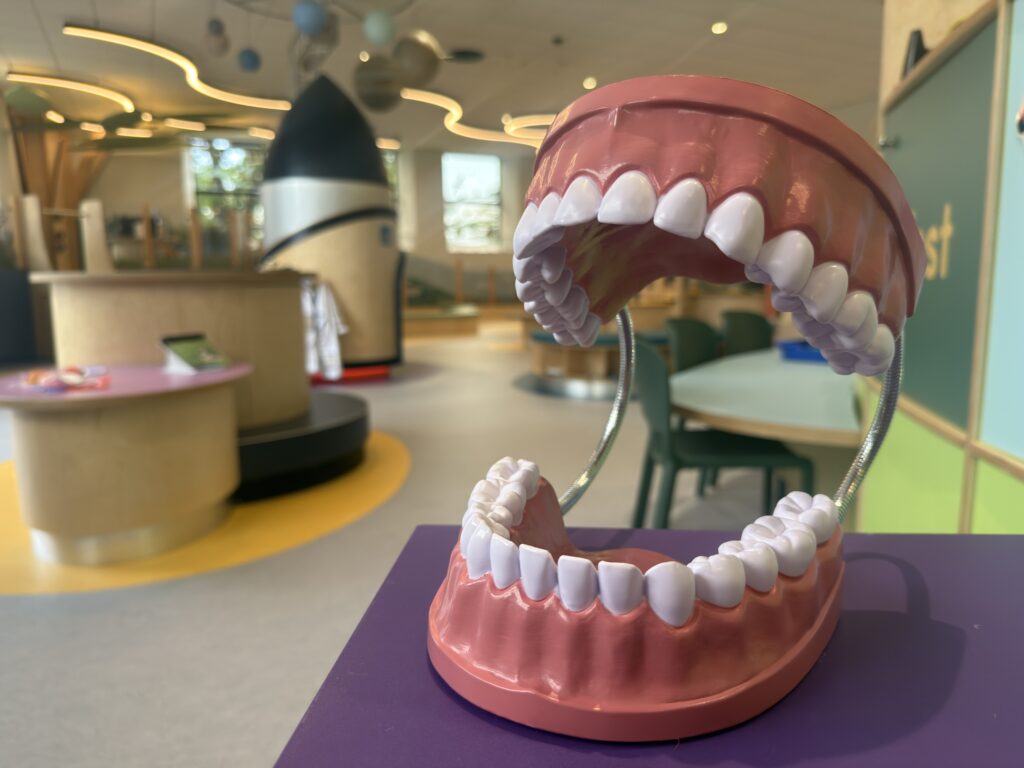
This fun, interactive workshop takes pupils on a fascinating journey through the history and science of dental care.

Starting with why healthy teeth matter, children explore how people cleaned their teeth from ancient Egypt to modern times, discovering some surprising and occasionally shocking ingredients along the way.

Pupils then become scientists themselves by creating and testing their own Bright Smile toothpaste against a shop-bought product. Through hands-on experiments, they investigate and compare how effectively each toothpaste works.

Packed with storytelling, science and practical activity, the session builds an understanding of oral health while encouraging curiosity, teamwork and plenty of smiling.

CfE links

  • SCN 0-07a
  • SCN 1-07a
  • SCN 2-07a
  • TCH 0-14a
  • TCH 1-14a
  • TCH 2-14a
  • TCH 1-14b
  • TCH 2-14b

Enquire

Exploring Our Senses: First Level

Exploring Our Senses: First Level

Stage: P2–P4

Investigate sight, hearing, smell, taste and touch through practical activities using familiar everyday materials.

Learn moreShow less

This First Level workshop encourages pupils to investigate how their senses help them understand and respond to the world around them.

Using simple everyday materials, learners explore sight, hearing, smell, taste and touch through a series of practical activities.

Pupils make observations, compare sensory information and discuss why different people may experience the same object or stimulus differently.

The workshop introduces the connection between sensory organs and the information they provide while encouraging careful observation, descriptive language and scientific questioning.

Activities can be adapted to ensure that learners with different sensory needs can participate safely and meaningfully.

CfE links

  • SCN 1-12b

Enquire

Exploring Our Senses: Second Level

Exploring Our Senses: Second Level

Stage: P5–P7

Investigate how our sensory organs detect information and explore how the brain helps us interpret and respond to different stimuli.

Learn moreShow less

This Second Level workshop develops pupils’ understanding of how the human senses detect and communicate information about the world around us.

Through practical investigations using everyday materials, learners explore sight, hearing, smell, taste and touch in greater depth.

Pupils consider the roles of different sensory organs and how information is passed to the brain, where it is interpreted to produce a response.

Activities encourage learners to make predictions, record observations, compare results and consider why sensory experiences can vary between individuals.

The workshop develops scientific investigation skills while building an understanding of the relationship between sensory organs, the nervous system and human perception.

CfE links

  • SCN 2-12b

Enquire

Electricity and Physical Sciences

How We Use Electricity in Our Homes

How We Use Electricity in Our Homes

Stage: N–P1

Identify familiar electrical items found around the home and explore how electricity can be used safely in everyday life.

Learn moreShow less

This Early Level workshop introduces learners to electricity through familiar objects and situations found around the home.

Children identify everyday items that use electricity and discuss what each item does, where its electricity comes from and how it should be used safely.

Through conversation and practical activities, learners begin to distinguish between electrical and non-electrical items while developing an awareness of basic electrical safety.

The workshop connects early science learning to children’s everyday experiences and encourages curiosity about how electricity helps us at home.

CfE links

  • SCN 0-09a

Enquire

Introduction to Circuit Building

Introduction to Circuit Building

Stage: P5–P7

Build and test electrical circuits while investigating components, resistors and the differences between series and parallel circuits.

Learn moreShow less

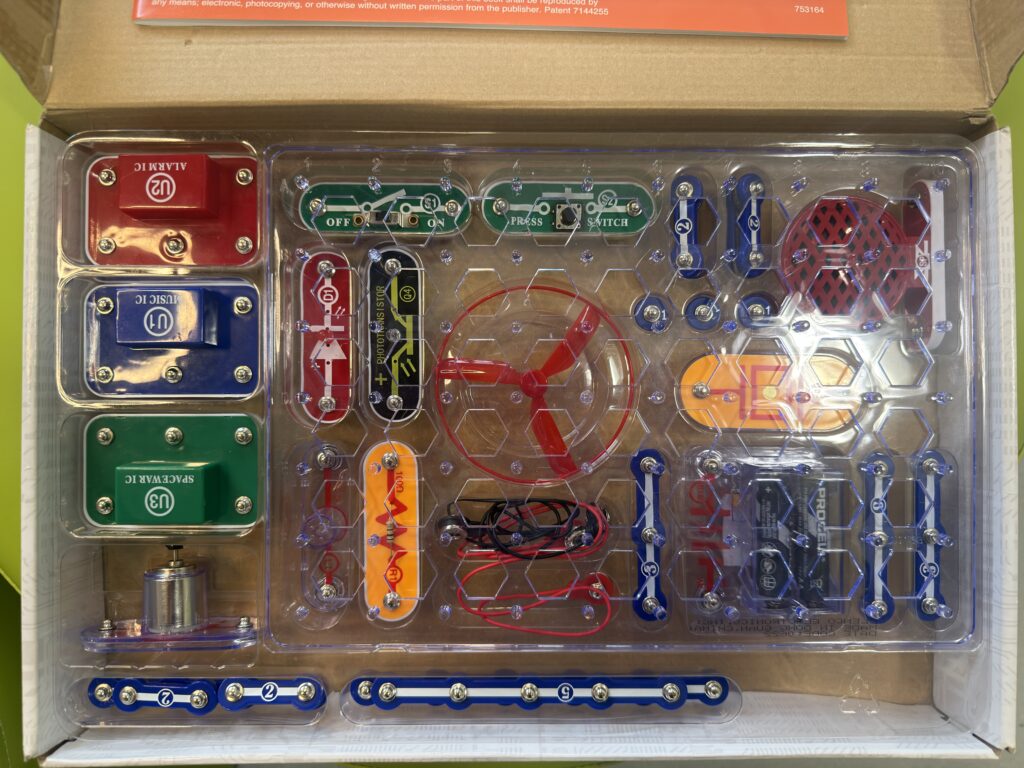
This Second Level workshop develops pupils’ understanding of electricity through practical circuit-building activities.

Using snap-circuit components, learners construct and test simple electrical circuits while becoming familiar with the role of different components.

Pupils investigate the differences between series and parallel circuits and explore how resistors can affect the operation of a circuit.

Through testing, troubleshooting and improving their designs, learners develop practical skills and a deeper understanding of how electrical circuits work.

CfE links

  • SCN 2-09a

Enquire

Conductors and Insulators

Conductors and Insulators

Stage: P5–P7

Pupils using a circuit to test electrical conductors and insulators

Learn moreShow less

This Second Level workshop introduces pupils to the properties of electrical conductors and insulators.

Learners begin by considering why different materials are used in electrical equipment and predicting which materials will allow electricity to pass through them.

Using a simple test circuit, pupils investigate a selection of everyday materials and record whether each one behaves as a conductor or an insulator.

The workshop encourages learners to compare their results, identify patterns and consider how conducting and insulating materials help electrical equipment work safely.

CfE links

  • SCN 2-09a

Enquire

Building a Battery

Building a Battery

Stage: P5–P7

Explore how chemical cells produce electricity before constructing and testing a working battery from simple materials.

Learn moreShow less

This Second Level workshop introduces pupils to the science behind batteries and chemical cells.

Learners explore how chemical energy can be converted into electrical energy and investigate the components needed to create a simple cell.

Using readily available materials, pupils construct their own battery before connecting it to a circuit and testing whether it can produce an electrical current.

Through practical investigation, observation and troubleshooting, learners develop their understanding of energy transfer while considering why different materials can affect the performance of a battery.

CfE links

  • SCN 2-10a

Enquire

Privacy Overview
Stem Starts

This website uses cookies so that we can provide you with the best user experience possible. Cookie information is stored in your browser and performs functions such as recognising you when you return to our website and helping our team to understand which sections of the website you find most interesting and useful.

Necessary

Strictly Necessary Cookie should be enabled at all times so that we can save your preferences for cookie settings.

Analytics

This website uses Google Analytics to collect anonymous information such as the number of visitors to the site, and the most popular pages. Keeping this cookie enabled helps us to improve our website.